Best eSIM for Italy: A Practical Buyer's Guide for Travelers
Which eSIM plan is best for Italy? This guide compares local Italian carriers and global travel eSIMs, explains coverage differences, walks through device.
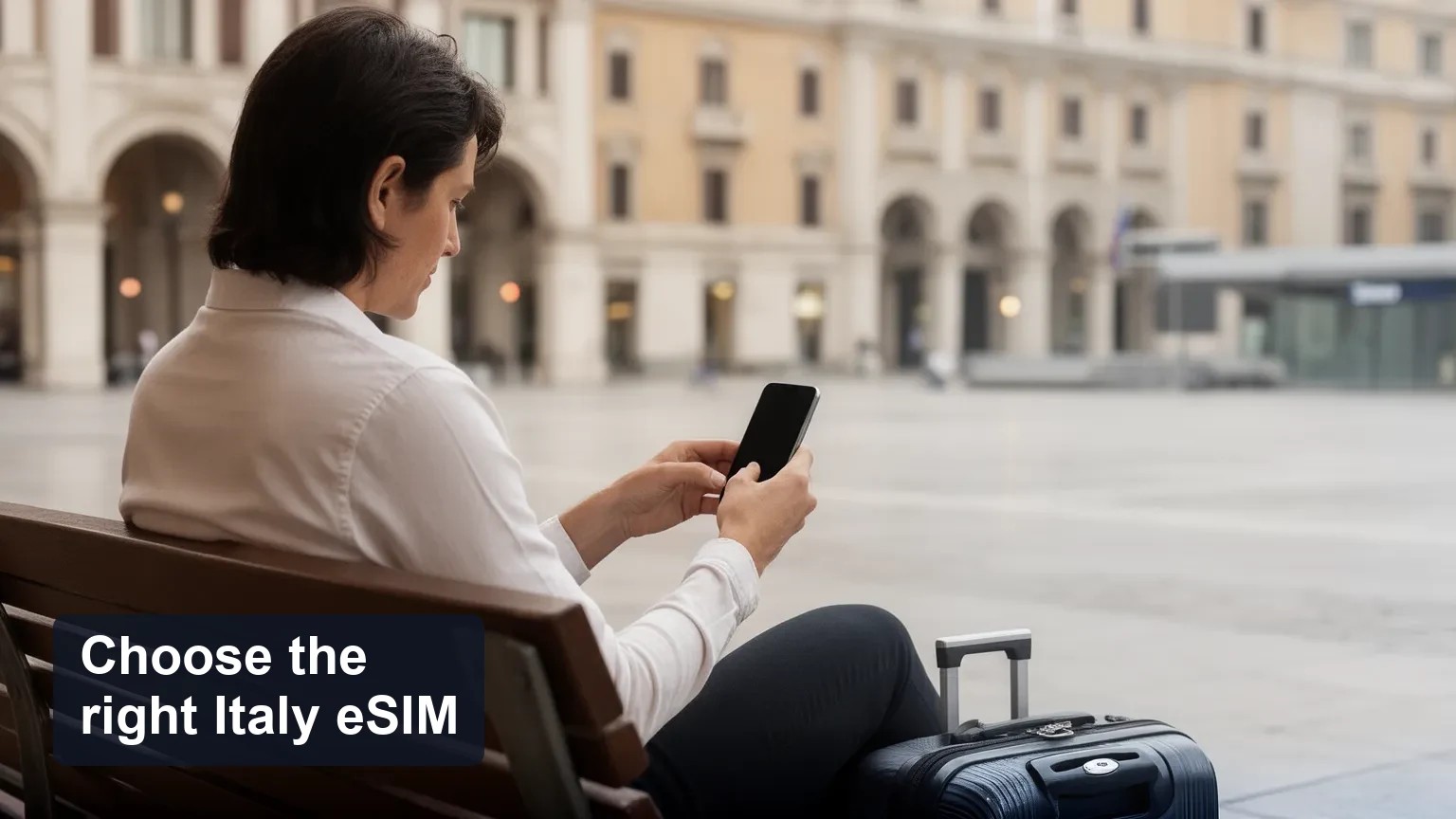
Direct answer (short): For most short-to-medium trips inside Italy, an Italy-specific eSIM from a major local carrier (TIM, Vodafone Italia, or WindTre) usually gives the best combination of in-country coverage and value. If you plan multi-country EU travel or want a single-plan convenience before arrival, a reputable global travel eSIM that lists Italy in its coverage can be a better fit.
Key Takeaways
Local-carrier Italy eSIMs (TIM, Vodafone, WindTre) often provide stronger rural and regional coverage inside Italy.
Global travel eSIMs are convenient for multi-country EU trips and pre-trip setup, but check carrier roaming terms and speeds.
Confirm device compatibility (Apple, Google, Samsung flagships commonly support eSIM) and follow step-by-step activation for your phone.
Buy from carrier stores or trusted resellers; verify registration, top-up, and support options before you travel.
Why this answer: quick reasoning
Local carriers operate the physical mobile networks in Italy and generally control local radio spectrum and tower agreements. That usually translates to more reliable signal in towns, countryside and regional rail routes. Global travel eSIMs resell access to local or roaming networks and prioritize convenience (one checkout, straight download); they can be ideal for short city trips or multi-country itineraries.
What varies: coverage quality by region (mountains, islands), specific plan roaming allowances, and whether you need voice/SMS or only data. See the decision framework below to pick the best option for your trip.
Local vs global travel eSIMs: practical pros and cons
Local carrier Italy eSIMs (TIM, Vodafone Italia, WindTre)
Pros: Native access to the carrier's full network, often better rural and regional coverage, straightforward in-country top-up and support, potential access to local promotions or bundled services.
Cons: You may need an Italian address or ID for full registration in some purchase channels; some packages assume the SIM is primary; roaming outside Italy may be limited or subject to fair-use policies.
Global travel eSIMs (resellers and multi-country plans)
Pros: Buy and install before you travel, single plan across several countries, clear pricing and short-term options tailored to tourists.
Cons: Often use roaming agreements and may have variable speeds or different priority than native subscribers. Coverage can vary regionally; check which Italian networks are used.
Recommendation pattern (decision framework):
Mostly city-based trip inside Italy (Rome, Milan, Florence) for under 10 days: global travel eSIM for convenience or a local eSIM if you prefer native coverage.
Wide Italy itinerary including rural areas, islands, or long train journeys: choose a local eSIM from TIM or Vodafone for better nationwide reach.
Multi-country EU trip including Italy: global travel eSIM or a local eSIM plus a low-cost EU roaming add-on—compare total cost and roaming rules.
Coverage and network differences by region and carrier
What to expect:
Big cities (Rome, Milan, Naples): all major carriers provide strong 4G/5G coverage; speed differences are usually minor for everyday use.
Regional/rural areas, hills, and islands: coverage can differ. Local carriers that own more regional towers or have roaming agreements will perform better.
Train corridors: performance varies by route and carrier; some carriers have better backbone connections and fewer handover drops.
How to verify: consult carrier coverage maps before buying. Carrier maps are helpful but can be high-level—if your trip includes remote areas, seek recent user reports or local forums.
Which carrier is best in practice?
TIM: often cited for broad national coverage and strong rural reach.
Vodafone Italia: often noted for excellent urban speeds and solid national presence.
WindTre: competitive pricing and growing coverage; performance varies by area.
(These are directional observations — verify up-to-date coverage maps for specific locations before you choose.)
Device compatibility and step-by-step activation
Facts and checks before purchase:
Modern Apple iPhone (XS and later), Google Pixel (from Pixel 2/3 with caveats), and many Samsung Galaxy flagships support eSIM. Check your exact model’s eSIM support and whether the device is carrier-locked.
A carrier-locked phone may not accept a foreign eSIM; unlock with your home carrier before travel if needed.
Activation steps — Apple iPhone (typical)
1. Ensure your iPhone model supports eSIM and is up to date (Settings > General > Software Update).
2. On Wi‑Fi, either scan the QR code provided by your carrier/reseller or open the carrier app and tap the eSIM install link.
3. After the eSIM is added (Settings > Cellular), label it (e.g., "Italy - TIM") and choose it as your default for data or voice as desired.
4. Turn on Data Roaming if your plan requires it (Settings > Cellular > Cellular Data Options > Data Roaming).
Activation steps — Android (Google Pixel, Samsung Galaxy — typical)
1. Confirm eSIM support and unlock status; install the carrier app or prepare the QR code.
2. In Settings > Network & Internet > Mobile Network > Add Carrier (path varies by vendor), scan the QR code or enter activation details.
3. Label the eSIM and select the preferred SIM for data and calls.
4. Enable roaming if required for the plan.
Dual-SIM guidance
You can keep your home physical SIM for calls/2FA and use the eSIM for data. Make sure to select which line is used for cellular data and for iMessage/WhatsApp if relevant.
Set roaming preferences and data limits to avoid accidental charges.
Troubleshooting common activation issues
Cannot scan QR: ask the vendor for a manual activation code or activation link.
No network after install: restart phone, confirm eSIM is enabled, check APN settings if the data does not work.
Carrier-locked device: the eSIM may install but not register; unlock the device with the original carrier before traveling.
Buying, registration, top-up, and in-country support
Where to buy:
Official carrier stores in Italy or their online stores (TIM, Vodafone Italia, WindTre): good in-country support and top-up options.
Airport kiosks and tourist counters: convenient on arrival but may have limited plan choices and queues.
Reputable global eSIM resellers: convenient pre-trip; check reviews, refund policy, and whether the plan lists the exact Italian networks used.
Registration and documentation:
Some local purchases may require ID or an Italian address for full registration. Online purchases vary by carrier and reseller.
Keep your eSIM QR and purchase confirmation email/screenshots until the plan is active.
Top-up and support:
Local carrier apps and web portals usually let you top up credit or buy packages; most have English-language options.
Global resellers typically provide online top-up or extra data purchases via their dashboard.
If you need in-person help, official carrier stores and shop counters in cities can assist with reissuing or troubleshooting.
Reissue, transfer, and support limitations (what can vary):
Some carriers allow re-issuing an eSIM to the same device; others require in-person verification for transfer to a new device.
Ask the vendor about device transfer policy if you plan to change phones while traveling.
Roaming across EU borders: rules and practical notes
Facts (to verify for your exact plan):
EU roaming regulations generally allow using a plan purchased in one EU country across other EU member states, subject to fair‑use limits and specific carrier rules.
Not all tourist eSIMs or global eSIM plans treat EU roaming the same—some Italy-specific plans are for in-country use only.
Practical tips:
If you plan a multi-country trip, confirm whether the Italy eSIM includes EU roaming or whether you need a separate multi-country plan.
For short border hops into neighboring microstates (San Marino, Vatican City), data typically follows the Italian network; still check plan specifics.
Practical tips at airports, train stations, and in transit
Download and install your eSIM while you still have Wi‑Fi at the airport (many Italian airports offer free Wi‑Fi), so you avoid relying on cellular before activation.
Train stations usually have Wi‑Fi; however, train coverage varies—choose a carrier with good corridor coverage if you rely on navigation or maps on longer routes.
If installing on arrival, keep your home SIM available for authentication texts or calls during activation.
Worked example
Trip: 10 days, Rome → Florence → Cinque Terre (lots of regional trains), mostly data for maps/uploads, occasional calls.
Decision: Prefer local carrier eSIM (TIM or Vodafone) because of better regional train and coastal coverage. Buy online from carrier store before departure or pick up at a main city store on arrival; install on airport Wi‑Fi and set eSIM as data line. Keep home SIM in physical slot for verification messages.
Common mistakes and failure modes
Trying to download eSIM without Wi‑Fi and before the plan activation window.
Not checking whether the phone is carrier-locked.
Forgetting to enable data roaming where the plan needs it.
Choosing a global plan without confirming which local networks it will use in Italy (could impact speeds in rural areas).
Final actionable checklist
Verify your phone model supports eSIM and that it is unlocked.
Decide: local Italy eSIM (coverage) vs global eSIM (multi-country convenience).
Confirm plan allows EU roaming if you’ll cross borders.
Buy from an official carrier store or a reputable reseller; save QR, activation code, and confirmation email.
Install on airport/train station Wi‑Fi, label the eSIM, set default data SIM, and enable roaming if required.
Keep home SIM in the device for SMS/2FA where needed.
FAQ
Q: Can I switch eSIMs mid-trip? A: Usually yes, but switching may require reissuing or reactivation steps depending on the vendor. Check transfer policies before purchase.
Q: Will an Italy eSIM work in nearby EU countries? A: Many Italy plans allow EU roaming under EU rules, but details and fair-use limits vary—confirm with the carrier or reseller.
Q: What if my eSIM won’t connect after install? A: Restart the phone, confirm eSIM is active, check APN and roaming settings, and contact carrier support if needed.
Where to compare plans
Look at official carrier pages (TIM, Vodafone Italia, WindTre) for native Italy options and coverage maps. For pre-trip convenience and multi-country plans, compare reputable eSIM resellers and check which local networks they use. If helpful, you can browse comparisons and purchase options on reseller marketplaces such as Esibyte.
Plane deine Reise mit diesen eSIM-Reisezielen
Entdecke zu diesem Thema passende Zieltarife und vergleiche Optionen vor deiner Reise.
Erhalte sofort globale eSIM-Datentarife ohne Roaminggebühren Aktiviere in Minuten und bleibe online mit flexiblen Prepaid-Paketen