eSIM vs Physical SIM: Which One Is Better for Travel?
When choosing a mobile plan for travel, many people wonder whether they should use a traditional SIM card or switch to an eSIM. Both options allow your phone to connect to mobile networks, but they work in very different ways. Understanding the difference can help you choose the best option for your travel needs.
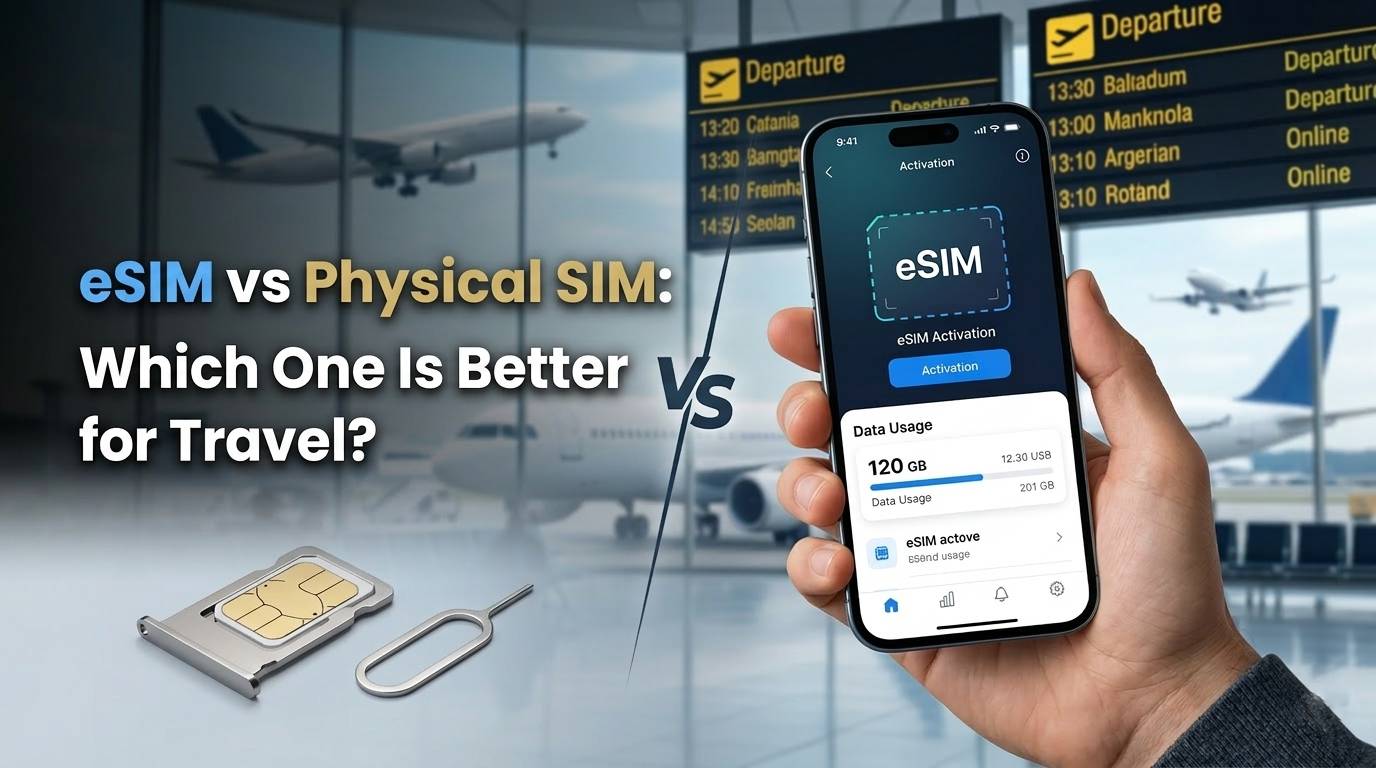
eSIM vs Physical SIM: Which One Should You Use?
When choosing a mobile plan for travel, many people wonder whether they should use a traditional SIM card or switch to an eSIM.
Both options allow your phone to connect to mobile networks, but they work in very different ways.
Understanding the difference can help you choose the best option for your travel needs.
What Is a Physical SIM?
A physical SIM card is a small chip inserted into your phone.
It stores information about your mobile plan and allows your device to connect to your carrier’s network.
Physical SIM cards have been used for decades and are still common in many phones.
What Is an eSIM?
An eSIM is a digital SIM card built into your device.
Instead of inserting a plastic SIM card, you install your mobile plan digitally.
Many newer smartphones now support eSIM technology.
Key Differences Between eSIM and Physical SIM
Installation
Physical SIM requires inserting a card.
eSIM installs digitally.
Flexibility
eSIM allows multiple plans on one device.
Travel convenience
Travelers can activate an eSIM without visiting a store.
Security
eSIMs cannot be removed if the device is stolen.
eSIM vs Physical SIM for International Travel
For international travel, eSIM is usually more convenient.
You can buy a plan online and activate it instantly when you arrive.
With a physical SIM, you often need to find a local store or airport vendor.
Who Should Use eSIM?
eSIM is ideal for:
digital nomads
frequent travelers
remote workers
business travelers
students studying abroad
Who Should Use Physical SIM?
A physical SIM may still make sense if:
your phone does not support eSIM
you frequently switch SIM cards between devices
you prefer traditional carrier plans
Final Verdict
For most modern travelers, eSIM offers a faster and more convenient way to stay connected abroad.
Plan your trip with these eSIM destinations
Discover destination plans related to this topic and compare options before you travel.
Get instant global eSIM data plans with no roaming fees Activate in minutes and stay online with flexible prepaid packages