Best eSIM for Vietnam: Which eSIM Should I Use and How to Activat
A practical guide for short-to-medium international travelers deciding which eSIM to use in Vietnam. Includes practical setup checks for travelers before departure.
Quick answer
Use an official Vietnamese carrier eSIM (Viettel, Vinaphone or Mobifone when available) if you want a local number and the widest coverage. For pure data and simplicity, buy a verified international or regional eSIM from a reputable reseller before you fly. Yes — you can often buy and install an eSIM before arrival, but eKYC rules vary by carrier and may require passport verification or an in-person step.
Key takeaways
Official carrier eSIMs (Viettel, Vinaphone, Mobifone) usually give the best local coverage and a Vietnamese phone number; they may require eKYC with a passport.
Buy-before-flight (official carrier portal or trusted global vendors) is convenient; airport kiosks and carrier stores work but watch for unverified resellers.
Check device compatibility (iPhone/Android OS versions) and follow the carrier’s step-by-step activation flow (QR, carrier app, or SMS).
Choose data amount and validity based on trip length and whether you need a local number for OTPs/payments.
Keep a troubleshooting checklist: APN, default data SIM, cellular plan removal steps, and how to switch between eSIM and physical SIM.
Why prioritize official Vietnamese carriers?
Facts: Official Vietnamese carriers issue local mobile numbers, control local network settings and generally provide the best nationwide coverage. Recommendations: If you need reliable service outside the big cities (rural or islands), prioritize carrier eSIMs from Viettel, Vinaphone or Mobifone where available.
Pros: local number for OTPs, better voice/SMS support, stable coverage.
Cons: eKYC or in-person ID rules may be stricter than global data-only eSIMs; activation sometimes requires a carrier app or a visit to a store.
Official Vietnamese carriers that sell eSIMs and how to buy them
Viettel: Has an official eSIM portal and sells tourist eSIMs. Buying options: online portal (may support eKYC), carrier app, or physical stores and airport counters.
Vinaphone & Mobifone: Historically offer eSIMs and tourist packages; availability and online eKYC vary by time and plan.
How to buy from an official carrier (general flow):
1. Visit the carrier’s official eSIM page or download its verified app.
2. Choose a plan (data-only or with local number).
3. Complete eKYC: upload passport photo and a selfie or visit a store if required.
4. Receive QR code or have the eSIM pushed to your device.
5. Follow activation instructions (see device section).
Tip: When buying on arrival, insist on an official receipt with the carrier name and the SIM/eSIM ICCID. If a seller asks you to install an unknown app or disable security features, walk away.
Device compatibility and step-by-step activation
Before you buy: confirm your phone supports eSIM and the specific OS versions required.
iPhone: Most recent iPhones (XS and later) support eSIM. Apple maintains a country/carrier list — check Apple Support for carriers that support eSIM in Vietnam.
Android: Many newer Android phones (Pixel, Samsung S and Note series, recent OnePlus) support eSIM, but implementation differs by manufacturer; confirm on the vendor page.
General activation steps (iOS and Android):
iOS (general)
1. Make sure iOS is updated to the carrier-recommended version.
2. Connect to Wi‑Fi.
3. Scan the eSIM QR code: Settings > Cellular > Add Cellular Plan, then scan the carrier QR code or use the carrier app.
4. Label the plan (e.g., “Viettel”).
5. Set your default line for cellular data, calls, and SMS if you have two lines.
6. Restart your phone if the carrier instructs it.
Android (general — steps vary by device)
1. Update Android to the latest stable version for your device.
2. Connect to Wi‑Fi.
3. Open Settings > Network & Internet > Mobile Network > Add Carrier (this path varies).
4. Scan QR code or import via carrier app.
5. Set the eSIM as the preferred data SIM if required.
6. Reboot if needed.
Notes: Some carriers “push” the eSIM to your device after verifying documents — you may get an SMS or app prompt instead of a QR code. Keep the phone unlocked and with Wi‑Fi access during installation.
eKYC, registration rules and ID requirements for tourists
Facts and practical guidance: Vietnam requires SIM registration to an identity. For tourists this normally means using your passport. What varies by carrier:
Some carriers allow fully remote eKYC with passport selfie and document upload.
Others require in-person registration at a store or kiosk on arrival (especially for SIMs that include voice/SMS or a local number).
Expect to provide passport data; keep your passport handy and ensure passport photos are clear.
Recommendations: If you need a local number for banking or OTPs, verify the carrier accepts tourist passport registration online before buying. If unsure, buy at an official carrier store or airport counter with your passport.
Buy-before-flight vs airport kiosks: pros and cons
Buy-before-flight (official carrier portals or reputable global eSIM vendors)
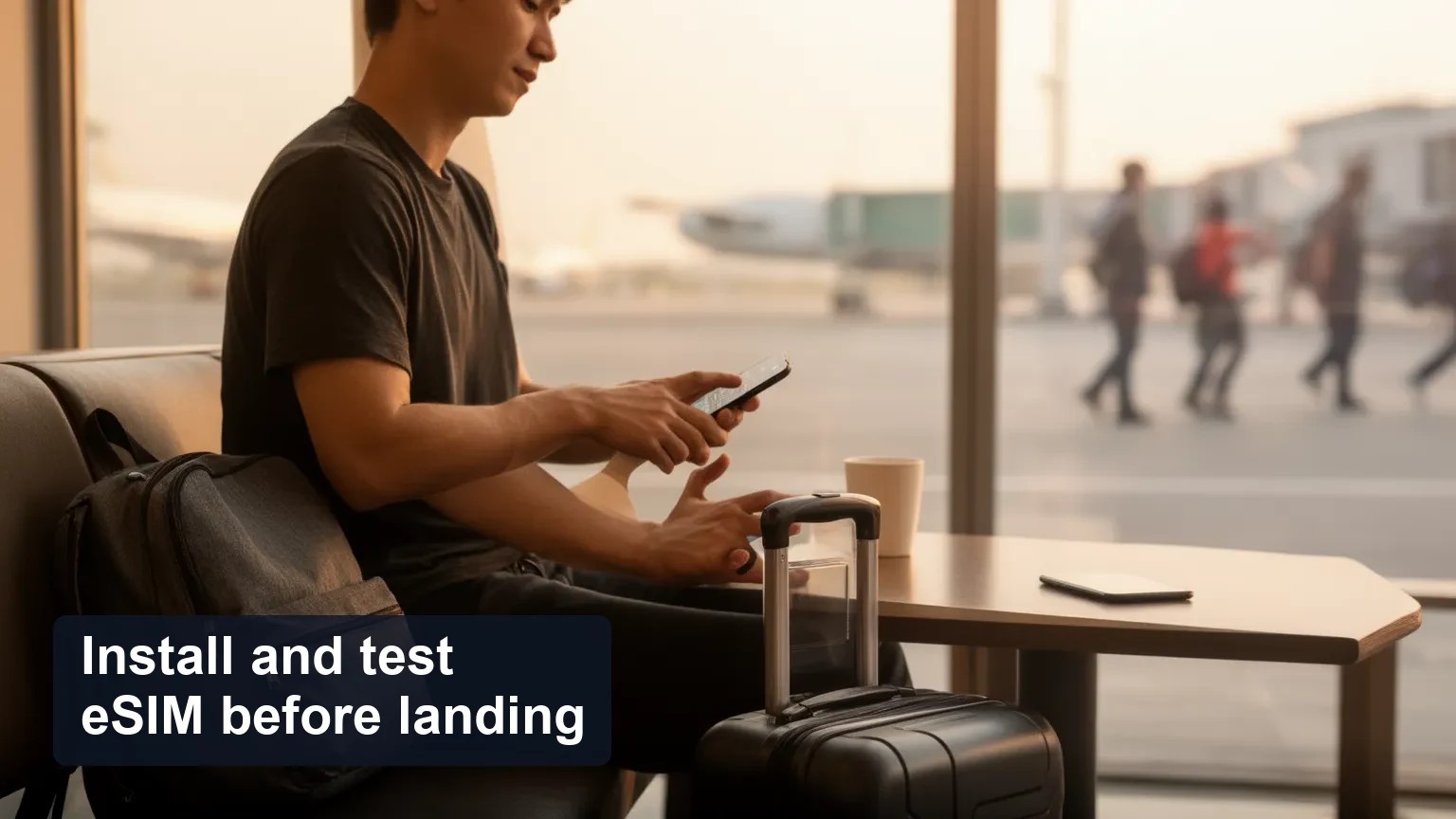
Pros: install and test before landing, skip lines, fewer unknown kiosk risks.
Cons: eKYC rejection could require an in-person step; some local number plans may not be available overseas.
Airport kiosks / carrier stores on arrival
Pros: staff can verify your passport in person and finish registration; immediate local number issuance.
Cons: airports may have unverified resellers — check seller credentials; potential higher price or pushy sales.
How to avoid reseller scams at airports
Buy only from official carrier counters or clearly branded official kiosks.
Ask for a printed receipt and ICCID.
Refuse if asked to share sensitive account passwords or to enable remote access to your phone.
Choosing data size, validity, and roaming rules
Decision criteria to use: trip length, daily data needs, whether you need a local number, and whether you’ll travel outside main cities.
Short city stays (3–7 days): 3–10 GB with 7–15 day validity often suffices for maps, messaging, social media.
Medium trips (8–21 days): 10–30 GB or higher and 15–30 day validity.
Rural travel or heavy streaming: choose carriers with broader coverage (Viettel often cited for best rural reach).
Roaming: Many local eSIM plans do not include international roaming outside Vietnam. If you plan multi-country travel, consider a regional or global eSIM for continuity and a local carrier eSIM for Vietnam-specific needs.
Worked example (decision framework applied)
Trip: 10 days Hanoi + Ha Long Bay, moderate navigation and photo uploads.
Decision: buy a 15-day 8–12 GB eSIM from an official Viettel or Vinaphone tourist bundle (local number helpful for bookings), or a 10–15 GB regional eSIM bought before flight if you prefer simpler eKYC.
Community questions — answered
Can I buy a Viettel eSIM before landing in Hanoi?
Often yes — Viettel has an eSIM portal and may support online eKYC and overseas purchases. Verify on the carrier site whether the specific tourist plan supports overseas purchase and activation.
Will a global eSIM work outside Hanoi and Ho Chi Minh?
Global or regional eSIMs typically use partner networks and can work across many places, but local carrier eSIMs usually outperform them in rural coverage. If you’ll leave major cities frequently, prefer a local carrier eSIM.
Do airport sellers sell legit eSIMs or scams?
Legit official carrier booths and branded counters sell genuine eSIMs. Casual street vendors or unbranded kiosks are higher risk. Ask for proof of carrier branding and a receipt; decline offers that seem rushed or require insecure steps.
How do I switch between physical SIM and eSIM?
On iPhone or Android, go to Cellular/Mobile settings and set the default data line and voice line. You can keep both enabled (dual-SIM operation) and choose which is used for data, calls, or SMS.
Traveler objections (answered)
"My phone might not support eSIM": Check your exact model and OS before buying. If not supported, use a physical SIM in Vietnam.
"I don't trust third-party resellers at airports": Buy from carrier stores or buy-before-flight from verified platforms.
"I'm worried eKYC will require a Vietnamese ID": Carriers accept passports for tourists; Vietnamese national ID is not required for foreign visitors.
"I prefer a local number for OTPs": Choose an official carrier plan that issues a local number (verify the plan details before purchase).
Common mistakes and troubleshooting
Common mistakes
Buying from unverified airport sellers.
Assuming international eSIM has the same speeds or coverage as local carriers.
Not checking device eSIM compatibility before travel.
Forgetting to disable roaming on your old SIM and incurring charges.
Troubleshooting checklist
1. QR won't scan: import manually if the carrier provides an activation code or use the carrier app.
2. No data after activation: set the eSIM as the default data plan and check APN settings.
3. eSIM not listed: confirm the eSIM profile was downloaded and that the carrier pushed it; contact carrier support.
4. OTPs not arriving: ensure SMS is enabled on the eSIM and that the service supports foreign-number OTPs; keep your original number active if needed for two-factor authentication.
Final actionable checklist before you leave
Confirm your phone model and OS support eSIM.
Decide if you need a local number or data-only.
Compare official carrier plans (Viettel, Vinaphone, Mobifone) and reputable global vendors.
If buying before flight: complete eKYC, install and test the eSIM on Wi‑Fi.
If buying on arrival: bring passport, buy at official carrier store, get a printed receipt and ICCID.
After activation: set default data SIM, test data, and reboot if necessary.
If you want a buy-before-flight option to test connectivity as soon as you land, reputable platforms such as Esibyte list official carrier and verified regional eSIMs and can be useful for comparison (https://esibyte.com).
FAQ
Q: Will Apple list Viettel as an eSIM carrier?
A: Apple publishes a country/carrier list; check Apple Support to confirm current carrier support for Vietnam.
Q: Can I use one eSIM for multiple trips?
A: Validity is set by the plan. Many eSIMs are single-use for their validity window; check the plan terms.
Closing note
Choose official carrier eSIMs if you need a local number and reliable coverage outside cities; choose verified global eSIMs for simplicity and pre-travel setup. Always verify eKYC requirements before purchase and keep your passport handy for registration.
Pr?parez votre voyage avec ces destinations eSIM
D?couvrez des forfaits destination li?s ? ce sujet et comparez vos options avant de partir.
Obtenez des forfaits de données eSIM mondiaux instantanés sans frais d'itinérance Activez en quelques minutes et restez en ligne avec des offres prépayées flexibles