What is an eSIM and how does it work for travel?
A practical traveler's guide to what an eSIM is, how remote SIM provisioning works, step-by-step activation before a trip, and how to decide between eSIM, roaming.
Key takeaways
An eSIM is a programmable SIM (an eUICC) built into your device that downloads a mobile profile over the air; for travel it can replace a physical local SIM or a roaming data plan.
You can usually buy and install travel eSIMs before you fly; activation typically involves scanning a QR code or importing a profile via an app and selecting it for mobile data.
eSIMs often provide data-only plans, while voice/SMS support varies by plan, device, and carrier—confirm plan details and device compatibility before travel.
Quick answer (direct, first 120 words)
What is an eSIM? An eSIM is an electronic SIM — a secure, rewritable SIM built into the device (technically an eUICC) that can download and store one or more carrier "profiles" remotely. For travel, an eSIM lets you buy a local or regional data plan and install it over the internet before arrival, so you can use mobile data on landing without swapping physical SIMs. Activation normally requires importing a profile (QR or app), enabling the profile for data, and choosing which line your device uses for cellular data or calls. Always check plan features (data vs voice/SMS), tethering policy, and whether your phone is unlocked.
What an eSIM is (simple, nontechnical)
eSIM stands for embedded SIM. The technical term used in standards is eUICC — a secure chip soldered into the device.
Instead of a removable plastic SIM card, the eUICC can securely download and store operator profiles (digital SIM identities) using remote SIM provisioning.
For travelers, that means you can switch networks by installing a provider’s profile rather than swapping a physical card.
How remote SIM provisioning and profiles are managed (clear steps)
A carrier or reseller issues a profile (often delivered as a QR code, activation code, or via an app).
Your phone uses a secure server-to-device process (remote SIM provisioning) to download the profile into the eUICC.
The profile contains the network credentials (IMSI/keys) that let your device register on the mobile network.
Many devices can store multiple profiles but typically only one profile is active for cellular data at a time (device behavior varies).
Profiles can be deleted, reinstalled, or switched through your phone’s cellular settings or the provider’s app.
Step-by-step travel activation: buy, install, enable before the flight
1. Verify your device supports consumer eSIMs and that it’s unlocked for use with foreign carriers.
2. Buy a travel eSIM plan that matches your trip corridor and data needs (many sellers let you buy by country, region, or multi-country bundles).
3. The seller sends an activation QR code, activation code, or links to automatically install via their app.
4. On your phone: open Settings > Add Cellular Plan (or follow the app’s install flow), scan the QR or import the profile, and name the line.
5. Before departure, set which line to use for cellular data and enable data roaming if required by your phone.
6. At arrival, switch to the travel profile if needed (some profiles activate automatically when they detect the network).
7. Test data right away and confirm APN settings if the connection fails.
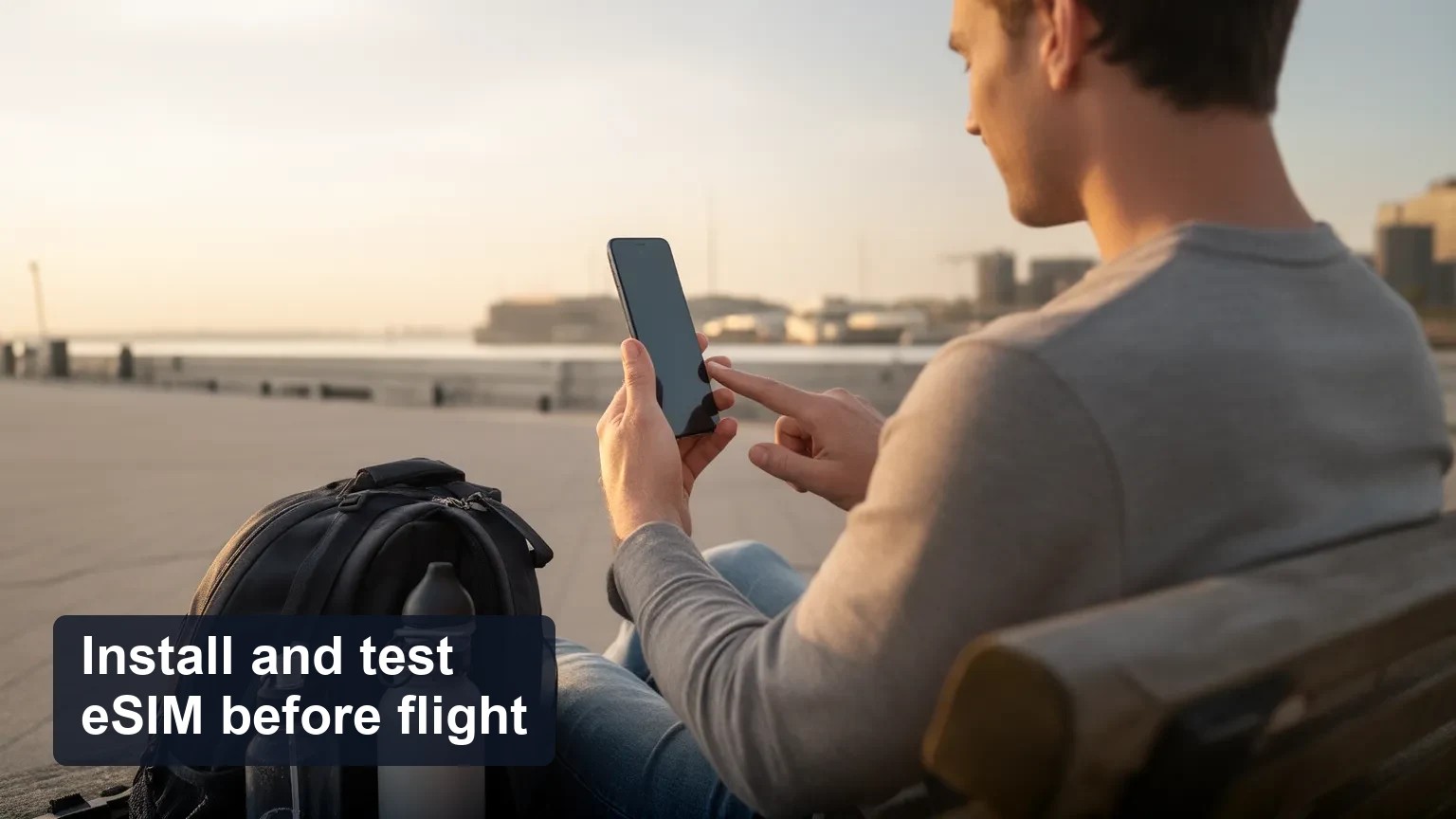
Tip: Install and test the eSIM on Wi‑Fi at home. Waiting until you land is a common mistake and can cost time and money.
Practical differences: eSIM vs carrier roaming vs local physical SIM
Convenience: eSIMs remove the need to handle tiny SIM cards and let you pre-install profiles before travel.
Cost: Travel eSIMs and local physical SIMs often provide lower per‑GB costs than home‑carrier roaming, but prices and caps vary widely.
Voice/SMS: Many travel eSIMs are data-only. Roaming with your home SIM usually preserves voice/SMS tied to your home number. Check plan details.
Activation timing: Roaming works immediately (if enabled), a local SIM requires a physical swap on arrival, and an eSIM can work before or on arrival depending on provisioning.
Flexibility: eSIMs make short multi-country trips easier because you can add multiple profiles without juggling cards.
Device compatibility, dual‑SIM setup, and hotspot support
Compatibility: Modern phones from major manufacturers often support eSIM, but supported models and minimum OS versions differ. Check the device manufacturer’s eSIM support page for your exact model.
Dual‑SIM: Many phones support a physical SIM plus an eSIM (hybrid dual‑SIM) or multiple eSIMs. Whether two eSIMs can be active at once depends on the device model and OS.
Hotspot/tethering: Most travel eSIMs allow tethering, but some providers or plans restrict it. If you rely on hotspot, verify the plan allows tethering and that APN settings are correct.
Decision flow: when to buy/install an eSIM vs use roaming or a local SIM
1. Is your phone eSIM-capable and unlocked? If no → use roaming (if acceptable) or buy a local physical SIM on arrival.
2. Do you need connectivity immediately on landing (airport pickup, navigation)? If yes → pre-install an eSIM or enable roaming before flying.
3. Is cost or data allowance the priority? If you want the cheapest local data and are comfortable swapping cards → a local physical SIM might be best.
4. Are you visiting multiple countries in one trip? If yes → multi-country eSIM bundles are often simpler than buying multiple physical SIMs.
5. Do you need voice/SMS on your travel number? If yes → confirm the eSIM supports voice; otherwise keep your home SIM active for calls.
Worked example: a 7-day European trip
If you want instant data at arrival and don’t want to handle cards: buy a regional Europe eSIM and install it before departure.
If you prefer the cheapest per‑GB rate and have time: buy a local SIM in your first city.
Community questions (real traveler language)
Can I install an eSIM at the airport on arrival?
Yes — if you can access Wi‑Fi and the provider supports on‑device activation via QR or app. However, connecting after landing can be slower and some sellers require activation in advance. For certainty, install and test on Wi‑Fi before your flight.
Will my home number still receive iMessage/WhatsApp?
Apps that use internet connectivity (WhatsApp, iMessage over data) usually continue to work once you’re signed in. SMS and calls to your home number will reach the SIM that remains active for voice; switching data to an eSIM doesn’t move your phone number unless the eSIM includes voice and you replace the home line.
Does eSIM support tethering or hotspot by default?
Often yes, but not always. Tethering is typically a device setting; some eSIM plans restrict hotspot use. Check the plan’s terms and test tethering after activation.
How long before departure should I activate my travel eSIM?
Install and test at least 24–48 hours before travel. That gives you time to troubleshoot, request a new activation code, or switch plans if needed.
Traveler objections, answered
"I don’t trust over‑the‑air SIM provisioning" — Remote provisioning uses industry-standard secure connections; choose reputable sellers, install apps only from official app stores, and delete profiles after use if desired.
"My carrier says eSIMs aren’t allowed on my plan" — Some carriers restrict eSIMs on certain plans, especially older prepaid or corporate plans. If your home carrier blocks third‑party eSIMs, use a physical SIM or a different travel provider.
"Worried I’ll lose my home phone number" — Installing an eSIM doesn’t delete your home number. Keep your home SIM active in a dual‑SIM setup if you need voice/SMS on that number.
"I prefer a physical SIM" — That’s fine; physical SIMs still work and sometimes are cheaper. eSIMs are a convenience option, not a requirement.
Common mistakes and troubleshooting
Waiting to buy or install until after landing — install and test at home.
Not enabling data or selecting the right cellular line in settings — confirm which line is active for data and which for voice.
Assuming every eSIM includes voice/SMS — check plan details; many travel eSIMs are data-only.
Forgetting to confirm your phone is unlocked — locked phones may not accept foreign profiles.
Troubleshooting quick steps:
1. Reboot the phone after installing the eSIM.
2. Confirm the eSIM profile shows as "active" in Cellular/Mobile settings.
3. Check APN settings if data connects but won’t load pages.
4. Try switching which line is used for data or enabling/disabling airplane mode to force registration.
5. Contact the eSIM seller with screenshots of error messages.
Decision checklist (use before you book or install)
Is my phone eSIM-capable and unlocked? Check the manufacturer support page.
Do I need immediate connectivity when I land? If yes — install before travel.
Do I require voice or SMS on a travel number? Confirm the eSIM supports it.
Will I need a hotspot? Verify the plan allows tethering.
Does the plan cover all countries in my trip corridor? Confirm roaming limits and fair usage policies.
Final practical checklist before travel
Install and test the eSIM on Wi‑Fi at home.
Name your cellular plans in settings so you know which is which.
Set the travel eSIM as the data line; keep your home SIM for calls if needed.
Note APN and activation codes in a secure note.
Take a screenshot of the activation instructions and seller contact details.
Where to verify device and plan details
Always cross-check:
Your phone maker’s eSIM support page (Apple, Google, Samsung, etc.).
The travel eSIM plan’s terms for voice, SMS, hotspot, and country coverage.
Your home carrier’s policy on eSIMs and unlocking.
If you want a short, printable checklist for installing an eSIM before a specific trip length (for example, a 7‑day or 14‑day trip), say which countries you’ll visit and the dates and I’ll outline the most relevant preflight steps.
FAQ (short answers to leftover questions)
Q: Can two active eSIMs work at the same time? A: Some devices allow dual active lines (e.g., one eSIM + one physical SIM, or in select models two active eSIMs), but behavior varies by device—verify the exact model.
Q: Will a travel eSIM change my WhatsApp or other app accounts? A: No; messaging apps tied to your account continue to work over data once you’re signed in. If you rely on SMS 2FA to your home number, keep that line active or plan ahead.
Q: Is installing an eSIM reversible? A: Yes — you can delete the travel profile when finished and reinstall later if the seller permits.
If you want a short, printable checklist for installing an eSIM before a specific trip length (for example, a 7‑day or 14‑day trip), say which countries you’ll visit and I’ll outline the most relevant preflight steps.
通过这些 eSIM 目的地规划你的行程
发现与本文主题相关的目的地套餐,并在出行前比较不同选项。
即刻开通全球 eSIM 流量套餐,无需支付漫游费 几分钟即可激活,使用灵活的预付费套餐随时在线